
After the latest spike in crude oil prices, petrol prices could potentially go up to around Rs 90 a litre making a dent in the consumer's wallet. This, the analysts fear, will push the cost of vehicle ownership in the country, further reducing the demand potential for the industry.

In Friday's market rally post the corporate tax cut, the country's top business promoters recouped more than two-thirds of the losses that they suffered in the post-Budget sell-off in equity markets.
The group firms reported combined losses of Rs 6,134 crore in FY19 against a net profit of Rs 5,414 crore a year ago. Excluding Vodafone Idea, the group reported a net profit of Rs 8,470 crore, down from a profit of Rs 9,582 crore a year ago.

These firms owe Rs 13 trillion to lenders and account for 55% of all non-financial corporate debt.

The companies' combined net profit declined by 10.1 per cent y-o-y during June '19 quarter against 26.2 per cent y-o-y growth a year ago.
Combined net profit of BSE500 companies at $ 63 bn is 2.3% of GDP; global average is 5%.

This amount does not include losses suffered indirectly through investment in mutual funds (MFs) and insurance companies.
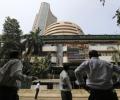
After turning net buyers for the fifth straight month till June, foreign portfolio investors (FPIs) withdrew a net of Rs 11,743 crore ($1.7 billion) in July. This was their highest outflow since October 2018.

Over the past one-and-half years, the number of stocks trading below their respective face value has increased 29 per cent after a sharp correction in stocks of small-cap companies.

An analysis of past 20 years' demand cycles done by Edelweiss Securities indicates that the auto sector is currently in the middle of a down cycle. Volume recovery, they say, is unlikely to be as sharp as in the past, unless there is strong fiscal support.

The list of companies skipping dividends in FY19 includes some of the country's largest firms and industry leaders such Tata Motors, Avenue Supermart, Future Retail and Vodafone Idea, among others.

'The people let off by the NBFCs have little bargaining power and willingly settle for a 20% to 25% cut in their existing salaries when hunting for new jobs.'

The proposal to increase public float, hike income tax surcharge, move to tax share buybacks and lack of stimulus to shore up economic growth has hurt investor sentiment.
Historically, there has been no correlation between growth in bank credit to industry and lower benchmark interest rate
The combined interest payment for India's top listed companies, excluding financial and oil and gas firms, was up 15.2 per cent year-on-year during the six months ended March 2019, outpacing the change in net sales and operating profit.

Foreign investors, according to them, will now wait-and-watch how the economy takes shape in the backdrop of doubts over monsoon, interest rate trajectory and other global events such as the US - China trade war.
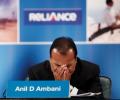
More asset sales may be only way out, though most of the group companies' ratings have been downgraded and their combined market value is now a fraction of their combined debt.

Going ahead, experts say, the fundraising trend in the primary market will depend on how the secondary market performs against the backdrop of the outcome of general elections and global cues.

The risk-reward ratio could turn adverse for foreign investors if corporate earnings disappoint by wide margins, or if crude oil prices spike in the international market, putting pressure on the rupee-dollar exchange rate.

The Hinduja Group, Mukesh Ambani, Murugappa, and the Adani groups were the other gainers in the Modi regime, while Naveen Jindal and Sun Pharma groups saw the most erosion in their m-cap in the last five years, reports Krishna Kant.
 © 2026 Rediff.com - Investor Information - Advertise with us - Disclaimer - Privacy Policy - Sitemap - Feedback - About us - Terms of use - Grievances